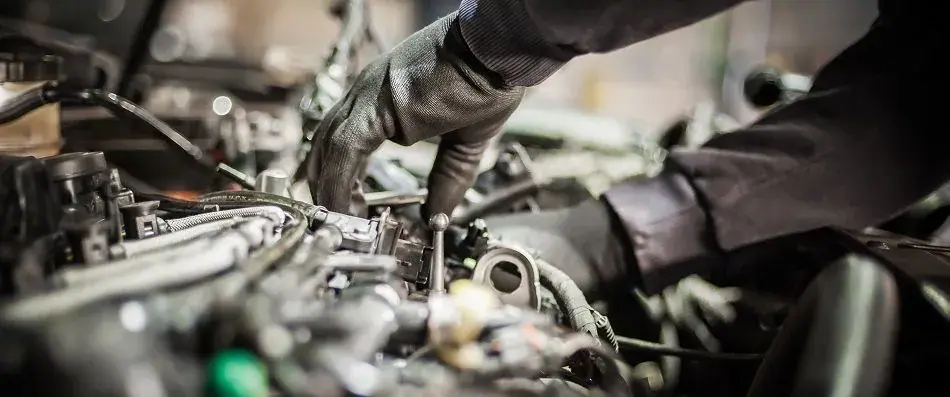

What we do for diagnostics
We find out why your check engine light or another dashboard warning came on, right here in Valencia. We've handled more than 760 diagnostic visits in the past 36 months.
The goal is simple. We find the cause before you spend money on parts. A stored trouble code is where a check engine light diagnosis starts, and testing is how it finishes.
Signs you need diagnostics
A check engine light is usually the first thing you'll notice. It often shows up with hard starts, a rough idle or an engine that hesitates when you press the gas. Each of those symptoms has more than one possible cause, so the light by itself can't tell you which part is at fault.
Watch how the light behaves. A solid check engine light with no drivability symptoms usually allows you to drive to a shop, but have it diagnosed promptly.
A flashing check engine light indicates an active misfire that can damage the catalytic converter. Stop driving and have the vehicle inspected. A misfire that keeps going can also overheat engine parts, and then a diagnosis can turn into an engine repair.
Why local driving is hard on the systems that trigger warning lights
Here in California, emissions rules make your car keep an eye on its own engine and exhaust parts, so small faults turn the light on fast.
- California requires 2004 and newer cars and light trucks to monitor their own engine and emissions parts for faults. An oxygen sensor, the part that measures leftover oxygen in the exhaust, can start sending bad readings. The computer then stores a code and lights the dash, which is the kind of fault our smog testing and repair handles.
- California's emissions program relies on that onboard system to spot defects that add to air pollution and to switch on the check engine light. A purge valve, which routes fuel tank vapor into the engine, can stick and let vapor in at the wrong time. That's enough to set a code.
What's included in a diagnostic visit
- Your description: You tell us when the light came on and how the car feels. That history narrows down where to look first.
- The stored codes: We read the trouble codes your car's computer saved. A code names the system that reported a problem. It doesn't name the bad part.
- Testing the flagged system: We test the parts and wiring in that system to find which one is actually failing. That's the step that keeps you from paying for a part you didn't need.
Our diagnostic process
- You bring your car in and tell us about the light and any symptoms.
- We run diagnostics to trace the fault to its source.
- We explain what we found and what the fix takes.
- You get a written estimate before any work begins.
What a diagnostic visit costs
The total comes down to how much testing it takes to pin down the fault on your car.
- Where the part sits: A sensor mounted in the open is quick to reach. One buried under other engine parts means removing those parts first.
- Problems that come and go: A loose connection that only acts up over bumps or with a hot engine takes extra drive time to catch.
- Several codes at once: One fault can set codes in related systems. Sorting out which one came first takes longer than chasing a single code.
Why people here choose us for diagnostics
Drivers on Google have left us 4.8 stars across 446 Google reviews, counted as of November 2026. We've been here since the shop opened in 2013. ASE-Certified technicians work in our bays.
We diagnose many makes, including Toyota and Ford. Once we know the cause, our full-service auto repair covers the fix. If your car stays with us for the repair, ask about our free loaner vehicles.